
Exhibition
Adebunmi Gbadebo | But They Could Look Out and Still See Signs of Home
Thursday, November 19
12:00 AM - Jan 9, 11:59 PM
Maximillian William
London, United Kingdom
Checking payment status…
Registration
Registration for this event is managed on an external website.
RSVPAbout the event
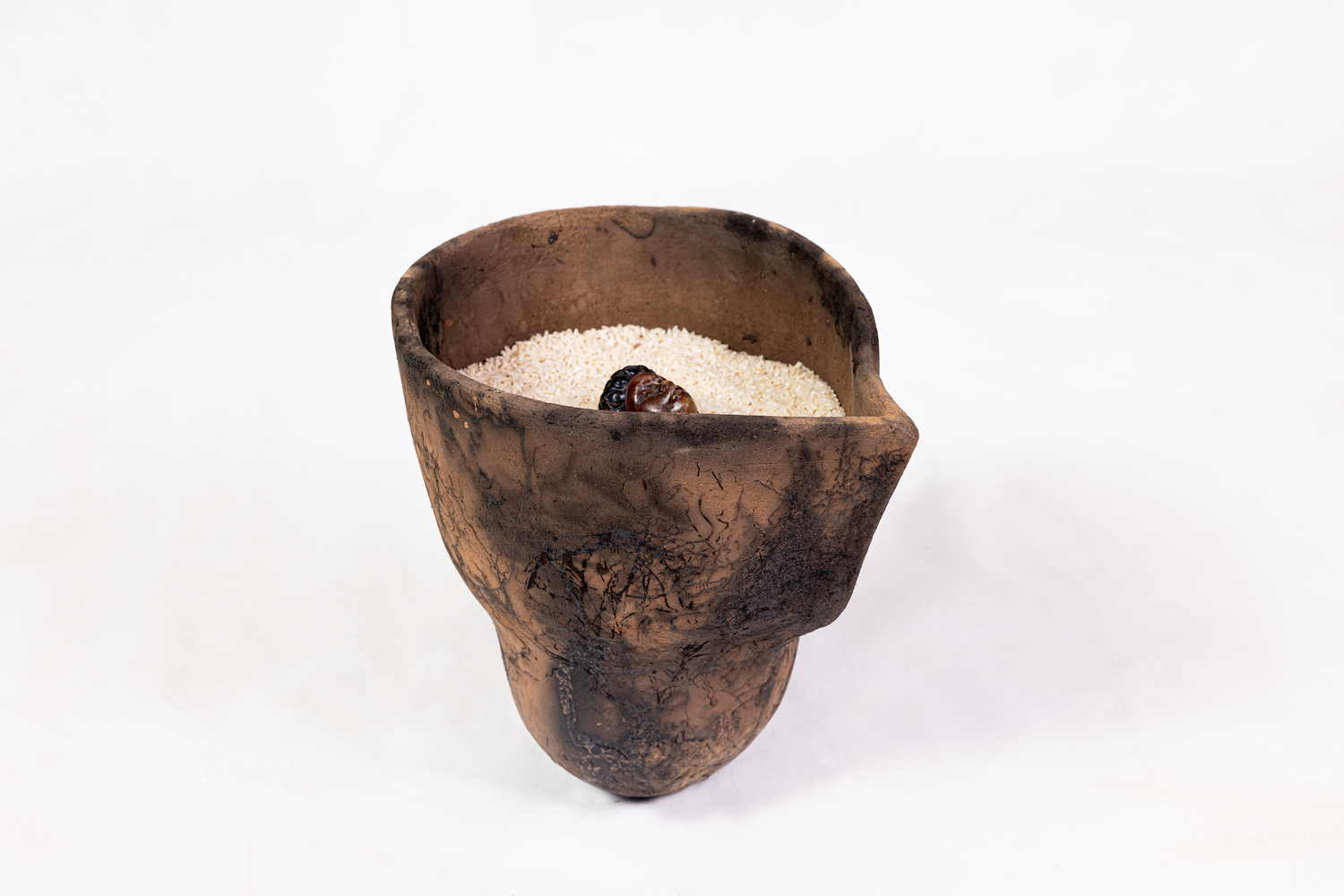
Maximillian William is pleased to present But They Could Look Out and Still See Signs of Home , the debut UK solo exhibition by Philadelphia-based artist Adebunmi Gbadebo (b. 1992, Livingston, New Jersey). For Gbadebo, materials are a way of tapping into the memory of her enslaved ancestors and the geology of historic land. In 2020, the artist first visited The True Blue plantation in Fort Motte, South Carolina, to bury her mother's ashes. Since then, Gbadebo has frequently returned to the site as a place of introspection and material gathering, hand-digging the soil directly from this earth that she transforms into clay. This new body of work marks Gbadebo’s first use of European earth, as well as the first time she has made work outside the United States. In In The Belly (Pacific Atlantic) , she combines clay from the True Blue plantation with soil excavated from a decommissioned kiln site in Bisbal, a small town in Catalonia, where she began making the work. Nestled in the centre is an African slingshot Gbadebo found in Barcelona, which she repatriates and brings to rest in the well of the ceramic. A tobacco pipe sourced in a Spanish antique market peeks through a bed of rice in But They Could Look Out and Still See Signs of Home, nodding to the enslaved labour underpinning Spain’s tobacco trade and modernisation. Revisiting forms that echo the maternal figure, Gbadebo shapes her clay into vessels that at times seem to evoke feminine bodies in their delicately pinched protrusions and womb-like cavities. Each vessel is hand-built instinctively using a Nigerian and Cameroonian coiling technique, one that involves building the vessel over time with gradual layering. The artist fires each vessel twice, removing it directly from the hot kiln at 538 Celsius and placing it into a container filled with human and horse hair, sugar, and locs – a process Gbadebo calls a ‘final burial’. Gestural black marks adhere to the hot surfaces, leaving behind a palimpsest of movement, a document of lines laid to rest across the vessels’ signature crackles with a carbonised red brick and black finish. The title of the exhibition is a quote taken from Nikki Giovanni’s poem Quilting the Black-Eyed Pea (We’re Going to Mars) (2002), which draws parallels between the unknown of space travel and the historical displacement of enslaved Africans across the Atlantic. Where Giovanni opens up a speculative space reflecting on inherited histories and possible futures, Gbadebo draws from her own experiences of travelling back and forth between Europe and America, crossing the same waters her ancestors were forced to traverse. Rice becomes a potent symbol of the fragments of home that both Gbadebo and her ancestors carried with them on their first journeys into unfamiliar territory. It asks what it means to yearn for signs of home when living in a foreign place. Whether in Gbadebo’s own deliberate journeys or the forced migration of her ancestors, the repetition of movement across continents becomes a means of inhabiting the past through the body. By layering these intersecting journeys, Gbadebo constructs radical forms of archival memory that function as poetic letters to her ancestors while offering enduring insight into her own relationship to them. Read more Toggle Sculpture
Event schedule
Starts
-
Thu, Nov 19, 2026 at 12:00 AM
Ends
-
Sat, Jan 9, 2027 at 11:59 PM
Location
47 Mortimer Street, London, England, W1W 8HJ, United Kingdom