Exhibition
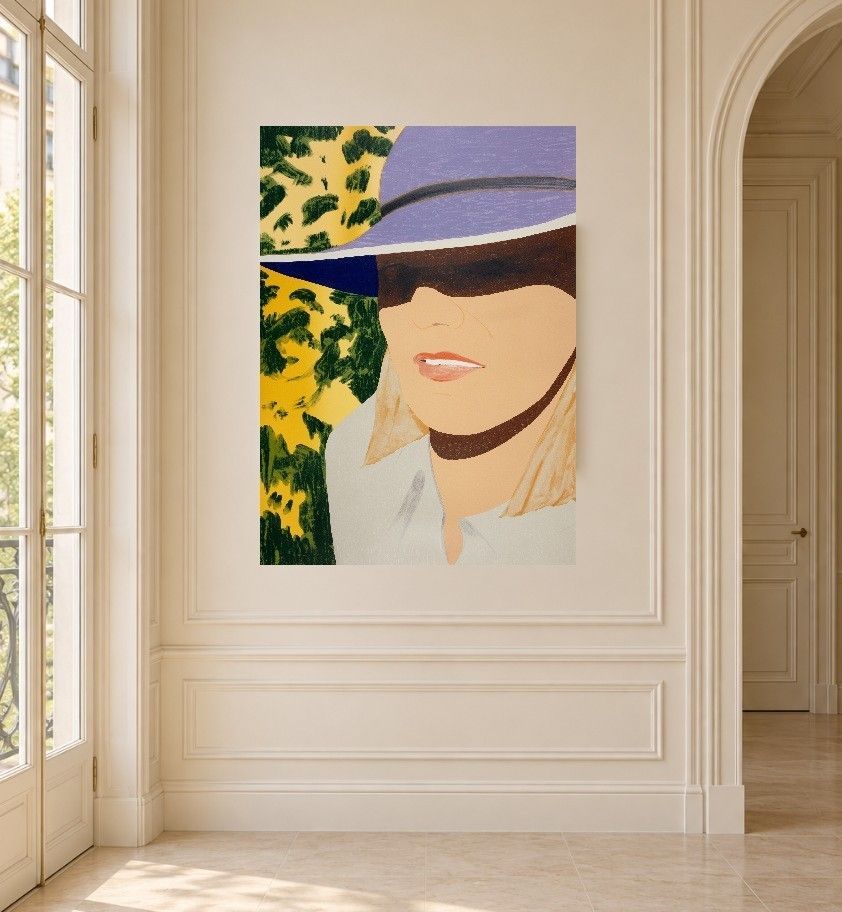
Alex Katz Sunrise 4 Purple Hat – New print edition released
Friday, November 20
12:00 AM - Nov 20, 11:59 PM
GALERIE FRANK FLUEGEL
Nuremberg, Germany
Checking payment status…
Registration
Registration for this event is managed on an external website.
RSVPAbout the event
American artist Alex Katz has just released a new print edition. The print is now available at FRANK FLUEGEL GALERIE in Nuremberg and Kitzbühel. Alex Katz Sunrise 4 - Purple Hat Woodcut. Edition of 50. Hand-signed and numbered. The new print was published right on time before Art Basel Miami Beach 2026 where it will also be shown. In 2023, a highly acclaimed Alex Katz exhibition took place at the Schindler House of The MAK Center for Art and Architecture in Los Angeles. The title was “Alex Katz: Sunrise.” The works in Alex Katz’s exhibition are all part of the artist’s ongoing series, which he refers to as “Splits.” Using a cut-up technique, he combines inspirations from Manet’s paintings of women wearing hats in the sun, the fragmented visual worlds of early Cubism, and the “cheap” aesthetic from Fassbinder’s “Beware of a Holy Whore.” These large-format, immersive portraits of Sunrise Ruffalo capture the fleeting nature of the gaze in everyday life. In late 1950, following a period of creative uncertainty, Katz began to focus increasingly on portrait painting. He painted his own circle of friends and, above all, his second wife and muse, Ada del Moro, whom he met in 1958. She became his most frequent model and is the subject of more than 1,000 works. Katz explained that his sole aim was to reproduce the appearance of the person portrayed—their superficial dimension—without becoming emotionally involved. At this point, he began using the flat, monochromatic backgrounds that would become one of the hallmarks of his style. The figure is depicted detached from the background in a bare space devoid of spatial references, objects, or light sources. Shortly thereafter, influenced by movie screens and billboards, Katz began creating large-format paintings, marking a turning point in his career. His intention at that time was to transpose figurative painting onto the large-canvas format characteristic of the Abstract Expressionists—something no one had done before. However, as he enlarged the canvas, he also enlarged the face of the subject, which is why he began painting large close-ups of portraits against monochromatic backgrounds, featuring fragmented facial features and often very tight compositional cropping, even drastically cropping the face out of the frame. This is evident in works such as “The Red Smile” (1963) and “Red Coat” (1982), in which red is the dominant element. Katz continued to explore the possibilities of portraiture by creating series on a single canvas. A portrait could appear twice or multiple times, similar to a photographic contact sheet or still frames in a film. He remained committed to his idea of not conveying the subject’s personality and not depicting them in different roles or at different moments in their lives, but rather of presenting the subject itself. Alex Katz’s “The Black Jacket” (1972) combines five images in a sequence and offers perspectives from various frontal and profile views. Katz’s early repetitions predated those of Andy Warhol, and his technique is entirely different: While Warhol automated the process through the use of screen printing, Katz repainted the image anew with each repetition, resulting in a different outcome every time. Sunrise #4 is an exemplary work by Alex Katz. In this print, Katz’s clean lines and minimal approach to portraiture are on display. Of course, so does the monochrome background that is typical of his compositions. These portraits have no clear narrative – it is not important for the viewer to know the person or the story behind the artwork. What Alex Katz is trying to emphasize is actually the beauty of the subjects. The use of soft colors and emphasis on fashionable details in his paintings transforms the coldness of sharp lines, lack of detail, and flatness into a work of art that the viewer can enjoy. Straw Hat 1 is a pigment print similar to screen printing. Reaching for the straw hat to complete our seaside look – or honestly, any summer outfit – is as instinctive to us as, say, breathing. Next to sunglasses, the straw hat is one of the most obvious accessories to protect us from the sun’s UV rays, but its origin is not entirely clear. When an item is as ubiquitous as a straw hat, it is virtually impossible to determine its original maker or even find the first documentation of its existence. It is believed to have appeared in Europe and Asia as early as the 15th century. In most Asian countries, including Japan, China, Indonesia, Malaysia, and Vietnam, rice field workers wore cone-shaped hats on their heads to protect themselves from the sun and rain. According to Vietnamese legend, the hat (nón lá) originated when a goddess descended from heaven wearing a giant hat made of four large leaves held together by bamboo sticks to protect people from a torrential downpour. In the Très Riches Heures du Duc de Berry, the most famous surviving example of an illuminated French Gothic manuscript written between 1412 and 1416, short-brimmed straw hats are worn primarily by men. In the 17th century, French women wore straw hats, and by the 1800s, European paintings show women posing for portraits in ribbon-adorned straw hats and upturned-brim hats covered with flowers. Vincent Van Gogh even immortalized his straw hat in an 1887 self-portrait. The first cowboy hat – made of straw, by the way – was invented by John B. Stetson in 1865, and the silhouette remains essentially unchanged today. In the late 1800s and early 1900s, straw hats were all the rage. But it wasn’t until President Theodore Roosevelt visited the Panama Canal in 1906 and was photographed at the construction site in his light-colored suit and Panama hat that the accessory gained notoriety. The light summer hat looked casual and elegant at the same time and became Ecuador’s number one export in 1944. Models with wider brims enjoyed great popularity about a decade later, although they were already considered indispensable for the beach. Frances Dee, Adrienne Ames and Judith Wood wore matching straw hats during a seaside portrait in the 1930s. Then-newcomer Brigitte Bardot wore a hat with an exaggerated brim when she had her photo taken in 1955. French actress Laurence de Monaghan styled her two-piece on the set of the 1970 drama Le Genou de Claire with a floppy version with a short brim. In the years that followed, straw hats appeared in all forms. Of course, fashion also had a say. One of the first straw hats on the runway – a taller model with a frayed brim – was presented in 1965. And in 1976, at the helm of French fashion house Chloé, Karl Lagerfeld sent down the runway a model wearing a ribbon-adorned straw hat with a white Greek-style dress. Perhaps it’s its low-maintenance nature or its utilitarian roots, but the straw hat was (and still is) one of those incredibly rare garments that remarkably transcended age, class, gender, and fashion genres. Is it the most democratic fashion item? It certainly seems to be. In 2026 other Alex Katz original prints besides a lot have been released: “Sunrise #4 - Straw Hat ”, “Autumn”, “Springtime” "White Lilies" "The Gathering" and “Grace”. FRANK FLUEGEL GALERIE, with locations in Nuremberg and Kitzbühel, has been specializing in high-quality originals of Pop Art, street art, and contemporary art for over twenty-five years. Art collectors can find artworks, prints, and one-of-a-kind pieces by popular and emerging artists such as Adam Handler, Katherine Bernhardt, Sol Felpeto, Jon Burgerman, Alex Katz, David Shrigley, Kenny Scharf, Hunt Slonem, Orit Fuchs, Nathan Paddison, Fanny Brodar, and Julian Opie at competitive market prices. Of course, original editions and paintings by highly sought-after and valuable artists such as Andy Warhol, Roy Lichtenstein, Harland Miller, Tom Wesselmann, Sean Scully, Gerhard Richter, Ross Bleckner, Thomas Ruff, and Mel Bochner are also available for purchase. Artists popular with collectors worldwide—including David Gerstein, Peter Doig, Jeff Koons, George Condo, Willem de Kooning, Salvatore Emblema, Tanya Ling, Gabriele Münter, Gerhard Richter, David Yarrow, Stefan Rinck, Kuldeep Singh, Günther Uecker, Tracey Emin, Raqib Shaw, Derrick Adams, and Robert Longo—are also represented in the portfolio of this internationally renowned gallery. Exhibitions and shows take place on a rotating basis in the centrally located gallery spaces in Nuremberg and Kitzbühel. FRANK FLUEGEL GALERIE—The Art of Reinventing Value. Collectors can purchase artworks around the clock in the gallery’s unique online shop. Participation in international art fairs and solo shows round out the program of this renowned gallery. The rapidly growing street art segment is perfectly complemented by successful artists such as Mr. Brainwash (Thierry Guetta), XOOOOX, Punk Me Tender, Fringe the Artist, Max Mavior, and John Crash Matos. Works by Mr. Brainwash are also on display at Art Basel Miami Beach 2026 as well as on Art Miami 2026 and as always on AIDA and Explora Cruiseships. Of course, the owner-managed gallery also offers design objects, paintings, and vintage furniture by Maurizio Cattelan, Richard Orlinski, and Pierre Jeanerette for sale. For 25 years, the gallery has successfully sold works by trendy artists all over the world. The gallery’s clients are located in London, New York, and Singapore, as well as in Dubai, Mallorca, Lima, and Miami. Collectors can purchase and take home many of the artworks on offer immediately during an in-person visit, as they are in stock. For some artists, rising prices are expected due to high demand. Artworks are increasing in price and have shown solid appreciation over the years. Read more Toggle Prints
Event schedule
Starts
-
Fri, Nov 20, 2026 at 12:00 AM
Ends
-
Sat, Nov 20, 2027 at 11:59 PM
Location
Obere Woerthstrasse 12, Nuremberg, Bavaria, 90403, Germany