Exhibition
Esteban Vicente: The Painter of Reality
Friday, October 2
12:00 AM - Jan 9, 12:00 AM
Instituto Cervantes | New York
New York, United States
Checking payment status…
Registration
Registration for this event is managed on an external website.
RSVPAbout event
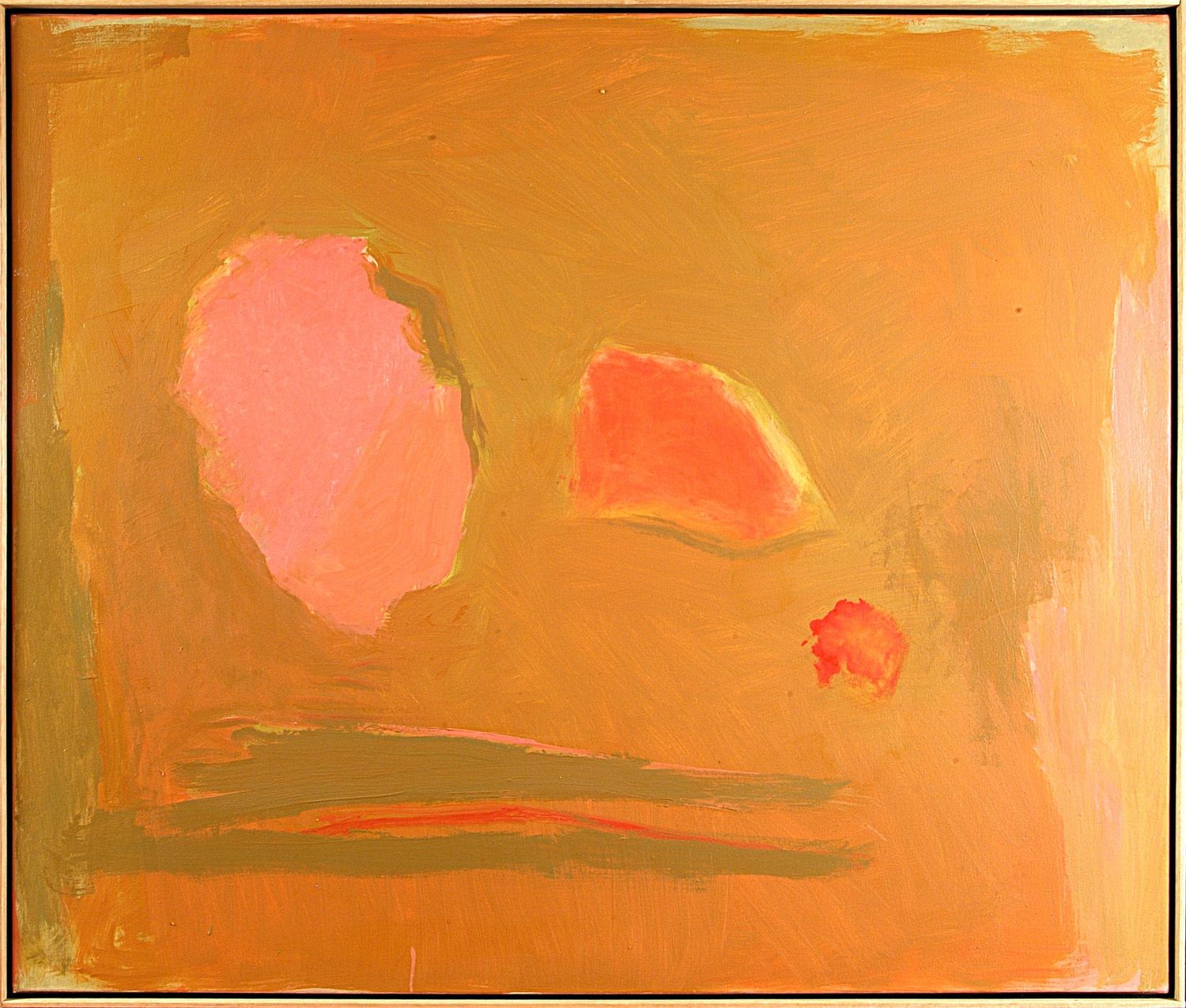
The Instituto Cervantes, The Harriet and Esteban Vicente Foundation, and the Museum of Contemporary Art Esteban Vicente present Esteban Vicente: The Painter of Reality, curated by Eren Johnson and Ana Doldán. About In 1936, at the outset of the Spanish Civil War, Esteban Vicente (Turégano, Segovia, 1903–Bridgehampton, New York, 2001) relocated to the United States, a country where he would live for the rest of his life. There, he forged a network of personal and professional relationships that led him to become a part of the American Abstract Expressionist movement, closely associating with its leading figures and earning the esteem of its most notable gallerists and critics. These influences were met with the background of a Spanish artist who, before his departure, had visited some of Europe's greatest art capitals, like Paris and London, embracing the most advanced art of his time. From all this emerged a singular body of work of rich significance to both American and Spanish art of the second half of the twentieth century. The title of this exhibition, curated by Eren Johnson and Ana Doldán and presented at the Instituto Cervantes in New York following its run in Rome, Warsaw, and Paris, is "Esteban Vicente: The Painter of Reality." It refers to a statement by the artist recorded in a 1968 interview with critic Irving Sandler: I will say that the real difference between the Spanish culture and the French or the Italian is the deep sense of reality. Again, this term "reality" is very difficult to grasp the way I see it. Because it's a quality that you find all through Spanish literature, in contrast with Italian literature or French literature. Take Cervantes, for instance. What comes through all his work is this terrific perception of reality. And then you see it again in Zurbarán. And I think I have something of that myself: that is, a sense of dislike for fancifulness. I think it's hard to find in Spanish art, whether it's literature or painting, any fanciful idea. True to Vicente's words, this exhibition brings together eighteen works dating from 1940 to 1996, on loan from The Harriet and Esteban Vicente Foundation, co-organizer of the exhibition alongside the Instituto Cervantes and the Esteban Vicente Museum of Contemporary Art in Segovia, Spain. The selection centers on the core ideas that defined Vicente's practice: the rejection of artifice in favor of painting's true reality, understood as a fundamentally sensorial experience; the need for order as the foundation of creation; austerity and sobriety of materials, rooted in the Spanish tradition of artists like Zurbarán and Juan Gris; intimacy and isolation; and, above all, the primacy of pictorial emotion. Although he began working within a renewed figurative style, Vicente moved toward abstraction through Cubism in a transitional stage that shed any faithful representation of reality. The exhibition opens with a work from this period ( Untitled , 1940–1949), characterized by interiors and still lifes broken down into planes and geometric forms, with a clear influence from Juan Gris. For Vicente, Cubism was not meant to copy reality, but to construct an autonomous, pictorial reality through form and composition. The works made during his stay in Puerto Rico (1944–1947) solidified this pursuit, marking his shift toward abstraction and, later, toward an entirely personal artistic conception. The strong presence of collage in this exhibition underscores the practice’s importance to Esteban Vicente’s search for the essence of painting. Pieces of paper bring a sense of materiality; their layering, effects of transparency, luminosity, and depth. Vicente's early works associated with Abstract Expressionism draw on a gestural style of mottled shapes reminiscent of de Kooning which, in Vicente's hand assumes a more lyrical, poetic tone. In the late 1960s, Vicente began an exploration of color fields, investigating the duality of color and light in his interior landscapes—near-architectural compositions with pools of color and diffuse edges where earlier gestures disappear. Here, his introduction of the airbrush was key, allowing for greater saturation and the ability to capture light— color is light , he'd say. Behind the command of color that defines Esteban Vicente’s work lays an emotional sensitivity informed by his surroundings. In color, Vicente found the language of his sensorial world, from the regal mountains and golden fields of his native Segovia—an identity he inhabited throughout his life—to the radiant florals of his Bridgehampton garden. Paintings like those in the Harriet series compose love letters to his wife, where colors map feelings that endure through time. The 1980s also marked the return of nature as Vicente’s source of inspiration; organic forms, broad and diverse, take over the canvas, revealing greater freedom and a richer, more varied palette. In the 1990s, he combined airbrushes with stencils and brushstrokes. His palette, now intense and diverse, emits a serene atmosphere, with a glowing halo that echoes the words of Unamuno: to dream, you must be awake ( Composición , 1994). Throughout the exhibition, several drawings continue to trace Vicente’s reality through line, contour, and the creation of texture. Finally, this selection expands our understanding of Vicente’s “toys” with a series of everyday objects transformed with paper, paint, ink, and charcoal into true three-dimensional collages. For Vicente, these small sculptures were exercises in balance, in the relationship between form and color, in an intimate poetics, and in freedom of expression. Together, paintings, collages, drawings, and objects reveal a single shared aspiration: to turn painting into a space where matter, color, and light transcend representation to become experience—for the artist, painting was vision, and light was the place in which to deposit the beauty, order, emotion, and tension that sustained his entire creative universe. Read more Toggle Painting
Schedule
Starts
-
Fri, Oct 2, 2026 at 12:00 AM
Ends
-
Sat, Jan 9, 2027 at 12:00 AM
Location
211 East 49th Street, New York, New York, 10017, United States