
Opening
Jonas Höschl: Men in Shades
Friday, November 13
6:00 PM - 9:00 PM
Galerie Anton Janizewski
Berlin, Germany
Checking payment status…
Registration
Registration for this event is managed on an external website.
RSVPAbout event
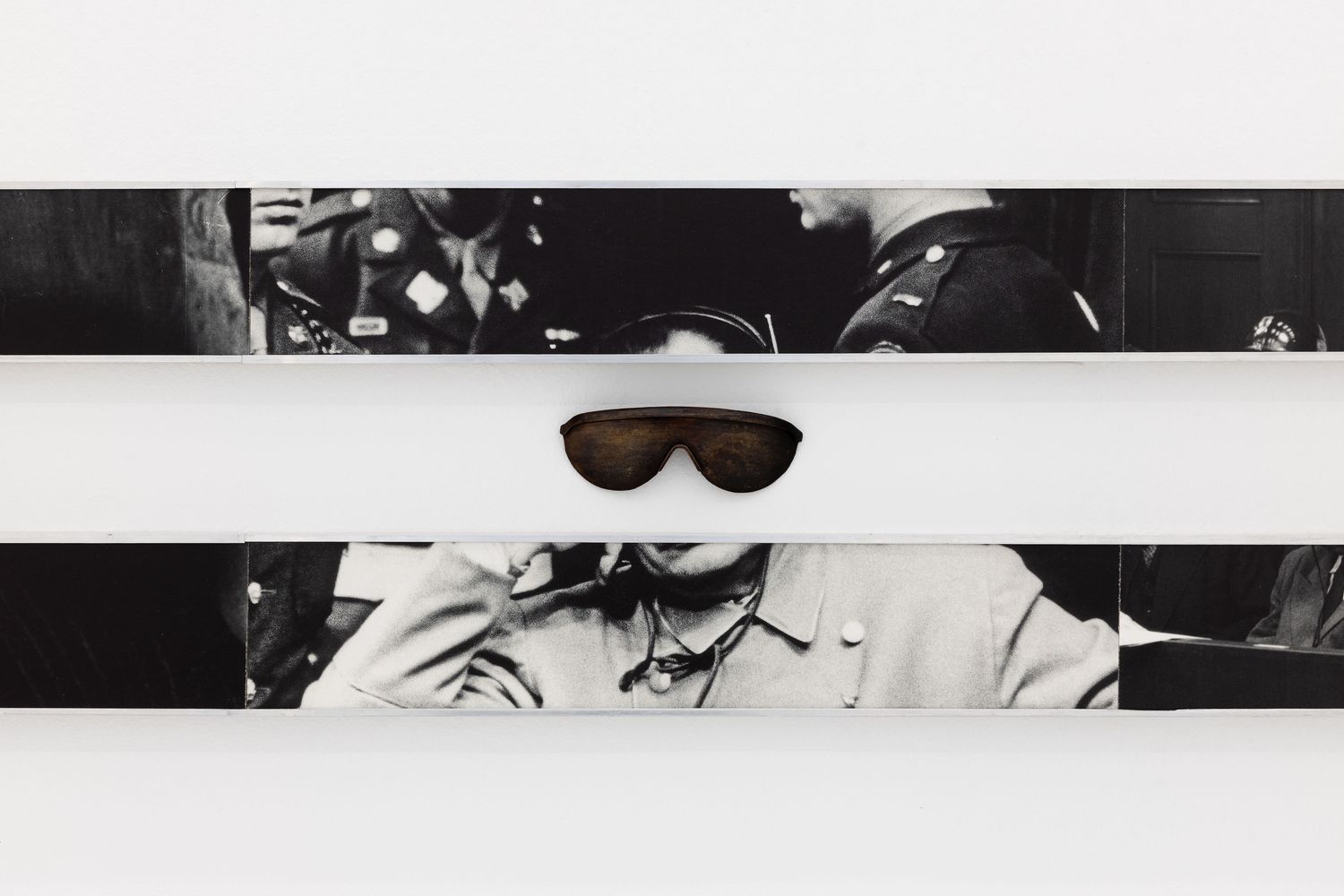
“Eighty years after the end of the Nuremberg Trial, Höschl’s body of work removes the defendants from the spotlight and shifts it to the invisible apparatuses and actors that produce visibility: photographers, industrial products, and the viewers themselves.” — Dr Clemens Villinger About Jonas Höschl: Men in Shades On 16 October 1946, Hans Frank faced his final judgment. At the Nuremberg Trial of the Major War Criminals, the tribunal sentenced Frank and eleven others to death. As Governor-General of the occupied Polish territories, Frank was responsible for the deaths of several million people. Alongside Hermann Göring, he was among the few defendants regularly photographed wearing sunglasses during the trial. Issued by the US military and manufactured by American Optical and Polaroid, the glasses came to define the defendants' appearance in the brightly lit courtroom, which had been set up for film and press photography. Hans Frank’s sunglasses are central to Jonas Höschl’s work Der Helle Saal (The Bright Hall). On two rails reminiscent of an optician’s display, Höschl places twenty-one bronze replicas of Frank’s sunglasses over the defendants' faces. For three defendants convicted in absentia, Höschl shows views of the dock. He obscures the defendants not only by giving them sunglasses, but also by cutting up the historical photographs, thus anonymising them. Höschl uses a similar method with images of neo-Nazis in his book 80 Portraits: 73 Men, 7 Women . By doing so, he strips the photographs of their original purpose and redirects our attention to the setting, the poses, and the visual codes. In rendering the defendants unrecognisable and removing them from the historical spotlight, Höschl draws attention to how the image of the sunglasses-wearing Nazi war criminal has turned into a visual icon. Although only a few defendants wore their sunglasses frequently, these images are omnipresent in the visual memory of the trial, highlighting the discrepancy between image and imagination. The diptych Day Vision accompanies the work. It features a photograph of tightly packed photographers as the verdicts were delivered in Nuremberg on 1 October 1946. Two layers are superimposed on the photograph: the promotional text from the auction house that sold Hans Frank’s sunglasses a few years ago – “Some of the most frightening images … are those showing those evil defendants … appearing even more menacing ‘concealed’ behind these sunglasses. Frightening.” – and excerpts from the history of American Optical, which has been producing eyewear for the US military since 1914. By anonymising the defendants, Höschl shifts our attention to those who are typically unseen, yet whose work produces visibility: the photographers. By making the visible invisible and the invisible visible, Höschl inverts the axis of the gaze. In doing so, he redirects our focus from the historical image itself to the circumstances of its creation, and, as a trained photographer, also interrogates his own role in the process. The third element of the work, Oppressive Light , comprises five aluminium composite (Dibond) prints based on stills from the music video for Corey Hart’s Sunglasses at Night (1983). Höschl incorporates motifs reminiscent of the Nuremberg Trial: a prison corridor, a policewoman, and stamped documents. Each print is rendered in a monochrome colour scheme, with a palette reflecting the spectrum of the Polaroid logo. Höschl pairs these images with quotations from a letter written by a US soldier to his father on 8 July 1946, in which he recounts receiving Hans Frank’s sunglasses from the commander of the Nuremberg prison months before Frank’s execution. In this way, Höschl interweaves the visual worlds of pop culture, photography and contemporary history, tracing the motif of the sunglasses across different media and historical contexts. Eighty years after the Nuremberg Trials, Jonas Höschl removes the defendants from the spotlight with this body of work. Instead, he directs it toward the invisible apparatuses and agents that create visibility: photographers, industrial objects and the viewers themselves. “Shut the Lites Off” (DJ Bone) – to bring darkness into the light. https://www.youtube.com/watch?v=PoGlxee8J-I Text: Dr. Clemens Villinger, translated by Dr. Anne Daffertshofer Read more Toggle Sculpture Installation Photography
Schedule
Starts
-
Fri, Nov 13, 2026 at 6:00 PM
Ends
-
Fri, Nov 13, 2026 at 9:00 PM
Location
Weydingerstraße 10, Berlin, Berlin, 10178, Germany