Exhibition
La Chola Poblete. Travesía Cuatro. Apertura Madrid Gallery Weekend 2026
Thursday, September 10
12:00 AM - Nov 7, 11:59 PM
Galería Travesía Cuatro
Madrid, Spain
Checking payment status…
Registration
Registration for this event is managed on an external website.
RSVPAbout event
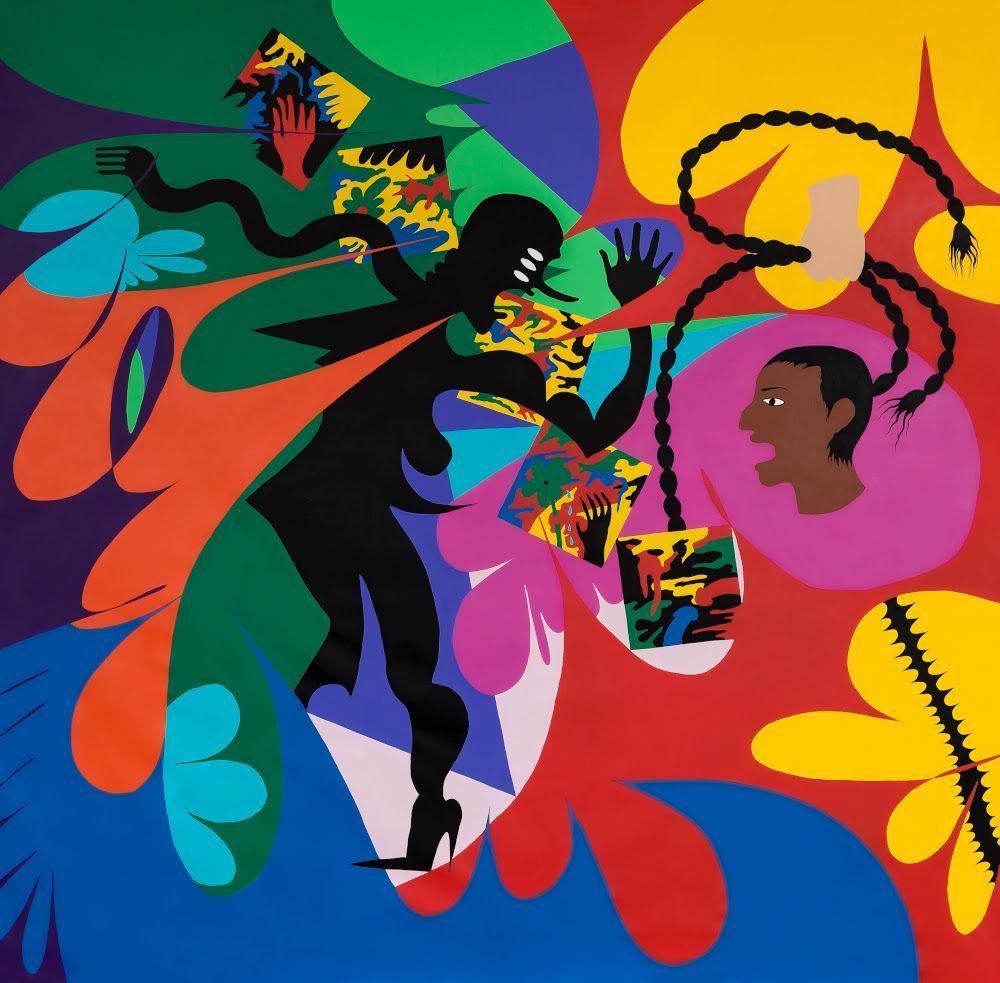
Marrón Barroco is La Chola Poblete’s (Guaymallén, Argentina, 1989) first solo exhibition in Spain. Its title comes from the mixing of two dissimilar worlds About MARRÓN [Brown] is a form of political identity expression, appropriated primarily in Argentina as a tool to reclaim the skin tones and facial features of the children of Indigenous people, peasants, and migrants, who have historically been rendered invisible by the myth of a “white” country whose inhabitants arrived in that territory by ship. BARROCO [Baroque] refers to an artistic style rooted in art history, which by definition establishes excess as one of its main characteristics and which was reappropriated from Latin America. The exhibition offers a panoramic overview of La Chola Poblete’s work, ranging from her famous watercolors to performance documentations and to unconventional materials such as “bread-sculpture.” This trajectory reflects Poblete’s process of transformation and evolution over the years, beginning with her early days in Guaymallén, a district in the province of Mendoza, Argentina. Its name derives from the Huarpe language and means “land of marshes, floodplains, or wetlands,” at the foot of the massive Andes mountain range. Autoretrato con ristra de ajos (2019) is one of her earliest pieces, rarely exhibited. In it, La Chola directly engages us with her body while carrying a string of garlic that becomes a whip-like tail. This is a direct reference to the work Self Portrait with Whip by the queer photographer Robert Mapplethorpe, and an expression of what she finds interesting in art. Another fundamental aspect is her connection to Buenos Aires, the city where she lives and produces much of her work. There, she established herself as a key figure in a scene where, historically, no trans artists had preceded her. Kill Your Idols (2025), one of her latest photography series, reflects this connection. Accompanied by Marta Minujin, Poblete takes us back to moments that have shaped popular culture through the media. Her body enacts Jacqueline Kennedy, transporting us directly to the assassination of President John F. Kennedy in 1963, represented in the figure of Marta. The car is white; the police officer on a motorcycle is now a delivery rider; and La Chola’s outfit reimagines Chanel in a reworking of the Andean aguayo . A chaotic scene that blends her biography, the history of Argentine avant-garde art, and the history imposed by the global hegemony represented by the United States. In the watercolor series Quiero dormir cansada (2026), she presents a mix of references arranged like a verbose potpourri, a multichannel imaginary of the experiences that have shaped her. These are images that explore a contaminated body of work drawn from pop culture: a Charly García album; Wiphalas ; Lionel Messi; roses bleeding out and characters crying blood; the Virgin and the infant Jesus, Chakanas … Her reclining body fills the page, intertwined with furious handwritten texts: “ Y los indios llegaron ” [“and the Indians arrived”]; “ Los psicópatas serán los hombres del siglo XXI ” [psychopaths will be the men of the 21st century]; “ Travas insistentes y resistentes ” [insistent and resilient trans women]; “ Existo porque resisto ” [I exist because I resist]. At other times, she entangles herself with bread masks, a food prepared by the introduction of a foreign element into the American territory: wheat. Many indigenous people adopted wheat as a central element of their daily lives. The masks also draw on an Andean tradition, inspired by Tanta Wawas or bread dolls, which are offered as a tribute to our ancestors who came before us. In this way, the artist subverts these materials and pays homage to bodies that have historically been silenced. La Chola subverts the gesture; she infiltrates canonical history itself, contaminating it, satirizing it, and even subverting it through her brown body, which calls into question the impacts of the colonial legacy. Everything is permeated by the way history has been constructed, by the establishment of the colonial project, and by its continued relevance in the present. Her exhibition culminates with a recent body of work created specifically for her debut in Madrid. These are the series Marrón Barroco and Hasta la tristeza es distinta con el sol . In them, she presents acrylic paintings in vibrant colors, a palette designed not to go unnoticed, filled with geometries and forms. In all the pieces, characters appear to interact and connect with one another; yet this is not a harmonious or idyllic relationship, but rather one of aggression. In her latest phase, against the backdrop of globalization and with a deep understanding of how the racial system continues to operate, La Chola presents images in which a character like herself, with braids, transforms her hair into a weapon of combat, like chains for self-defense against an entity that pursues her, torments her, and shouts at her. The forms of this entity evoke aesthetic constructs similar to those found in the Popol Vuh , a foundational text of the Maya-K’iche’ worldview, which addresses the conception of the world, its origin and downfall, as well as the beginning of the colonial process of the misnamed “encounter of two worlds.” Poblete captures forms of characters who circulate between worlds, forms from Xibalbá that do not necessarily represent evil, but rather something that transcends the models conceived by the Western world and Christianity. La Chola Poblete allows us to rethink ourselves, to dismantle the ideas established by art history through its multiple manifestations and forms and from the perspective of the Indigenous world. She is impure by virtue of her experience and infiltrates new contexts. And here I make clear that we are sisters; we are undercover in a voracious system in which we have decided to make a radical intervention, from the local to the global, and we ask ourselves whether it is possible for the marronas, the travestis , and the dissidents to be inscribed in a history that has always excluded us. Could it be that us travestis from the Global South can now become part of the canon? — Seba Calfuqueo Read more Toggle Painting Photography Installation
Schedule
Starts
-
Thu, Sep 10, 2026 at 12:00 AM
Ends
-
Sat, Nov 7, 2026 at 11:59 PM
Location
C. de San Mateo, 16, Centro, Madrid, Community of Madrid, 28004, Spain