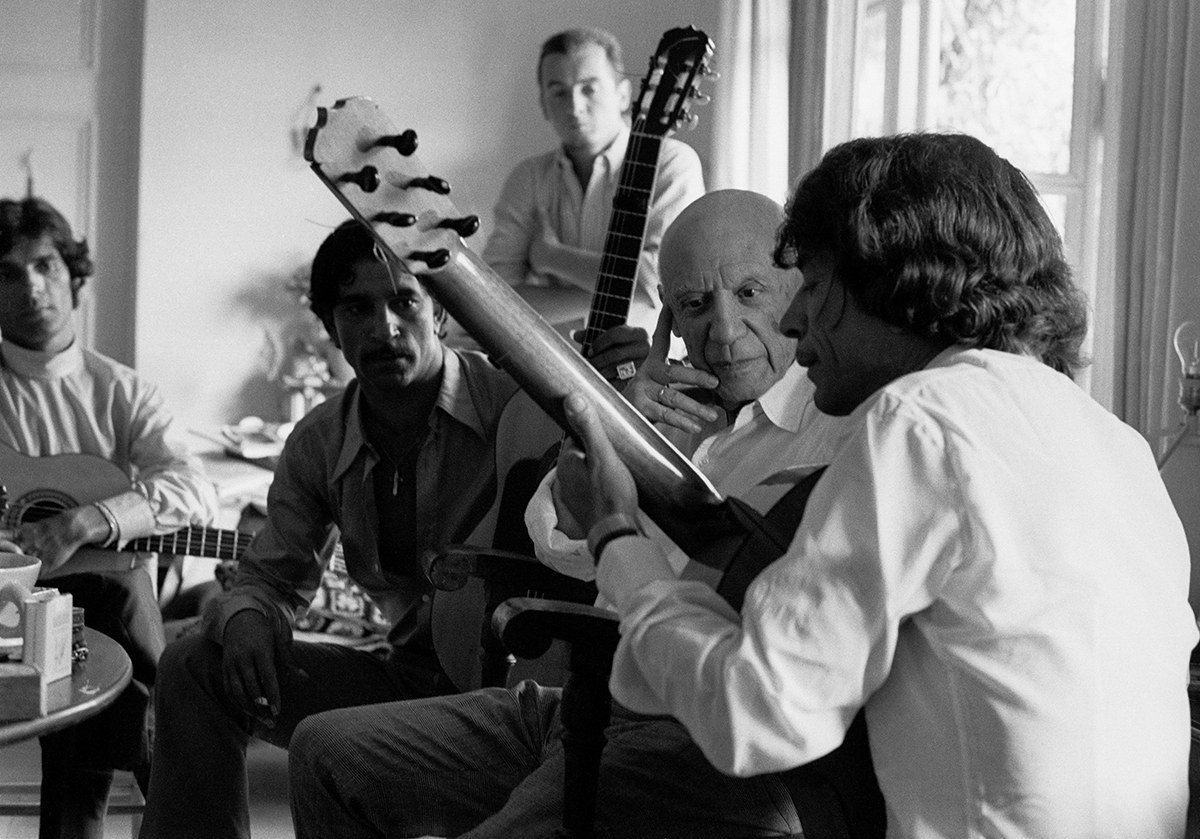
Exhibition
Lucien Clergue – Written by the Sun
Wednesday, September 23
12:00 AM - Oct 24, 11:59 PM
Mouraux Durand-Ruel Gallery
New York, United States
Checking payment status…
Registration
Registration for this event is managed on an external website.
RSVPAbout event
A retrospective of black-and-white photographs by Lucien Clergue spanning the 1950s to early 2000s, exploring theater, memory, music, light, and the human body. About For its inaugural exhibition, Mouraux Durand-Ruel Gallery is pleased to present a retrospective exhibition on Lucien Clergue, Written by the Sun, from September 23rd to October 24th at 555 West 25th Street in Chelsea. Bringing together fourty black-and-white photographs made from the 1950s to the early 2000s, depicting the different worlds through which he constructed his photographic language: theater and memory, music and community, the effect of light and poetry on the human body. The exhibition takes its title from the Mediterranean light that shaped Lucien Clergue's vision from his early Saltimbanques and the Gypsies pictures to the architectural series Brasília, his celebrated nude photographs, and intimate portraits of Pablo Picasso and Jean Cocteau. Clergue's stature in French photography is without parallel. He was the first photographer elected to France's Académie des Beaux-Arts and, the founder of the Rencontres d'Arles, one of the world's foremost photography festivals. Born in Arles in 1934, his love for photography started at a young age. At thirteen, he received his first camera and at nineteen, he met Pablo Picasso at a bullfight in the Roman arena of Arles. Over the next two decades, Clergue photographed the artist from the villa La Californie in Cannes to Notre-Dame-de-Vie in Mougins, where he made his final portrait of Picasso in 1971. These photographs reveal the artist at work, at rest, and in moments of quiet intimacy, reflecting the trust that existed between the two men. Among the earliest works in the exhibition are Clergue's Saltimbanques, begun in 1954. Fascinated by theater from a young age, he staged children as Harlequins, Pierrots, violinists, and circus performers among the ruins of postwar Arles, creating poetic tableaux shaped by memory and loss. The following year, Clergue turned his attention to the Gypsies. Having grown up alongside families from the community in Arles, he photographed them with unusual intimacy. Clergue deliberately resisted presenting their lives primarily through hardship. What fascinated him was movement: dance, music, rituals. "Gypsies are people to whom the present only exists," he later wrote. His photographs captured the musical composition of these scenes. These photographs led to his friendship with Jean Cocteau, whom Picasso introduced to Clergue in 1956. Cocteau was one of the great multidisciplinary artists of twentieth-century French culture. Cocteau described him as a "poet photographer." In 1959, he invited Clergue to photograph the making of his final film, Le Testament d'Orphée, giving him complete freedom to interpret what he saw. Clergue's photographs inhabit the same boundary between reality and invention. Portraits of Cocteau directing the movie coexist with theatrical visions of mythological characters. A radically different landscape appears in Brasília. Captured in 1963, these photographs depicted the newly created capital through Oscar Niemeyer's monumental architecture. Clergue recognized in Niemeyer's architecture a language close to his own treatment of the female body. Abstract compositions of light, concrete, curve, and volume appears. The Brasília series is very unique as Clergue was really attached to these ones and printed them the last year of his life. Very few lifetime prints from this body of work exist today. That dialogue between body, landscape, and light lies at the heart of Clergue's iconic Nudes of the Sea. Photographed along the shores of the Camargue in France, these close-up images transform the female body into an elemental landscape. Emerging from the surf, the figures become timeless symbols of nature, sensuality, and the Mediterranean Sea. Water continually reshapes the body, dissolving the boundary between the human figure and the natural world. These photographs helped establish Clergue internationally as Edward Steichen acquired nine of his prints for the Museum of Modern Art in 1960 where Clergue was invited to exhibit the following year in Diogenes with a Camera V (September 26 to November 12, 1961). If the Nudes of the Sea belong to the open horizons of the Mediterranean, Clergue's later Zebra Nudes shift into an urban interior. Inspired by Venetian blinds in a New York apartment, the series uses bands of light and shadow to fragment and reconstruct the female body. Here, light no longer simply reveals the figure; it draws directly across the skin and becomes the image's principal subject. "Opening with Lucien Clergue felt inevitable. His work is deeply connected to the South of France, a region that is particularly close to my heart, but this exhibition also reveals his innovative vision. I wanted to reintroduce his creations to an American audience, and especially to New York, a city that played an important role in his career. I hope this exhibition will encourage a new generation to rediscover his work," shared Victoria Mouraux Durand-Ruel. This exhibition has been organized in close collaboration with Anne Clergue, the artist's daughter, who directs the Atelier Lucien Clergue in Arles and oversees the preservation and promotion of his work through exhibitions, publications, and cultural projects. Read more Toggle Photography
Schedule
Starts
-
Wed, Sep 23, 2026 at 12:00 AM
Ends
-
Sat, Oct 24, 2026 at 11:59 PM
Location
555 West 25th Street, 3rd Floor,, New York, New York, 10001, United States
MG
Presented by
Mouraux Durand-Ruel Gallery