Exhibition
Mark Wallinger: Field
Wednesday, October 7
12:00 AM - Jan 23, 11:59 PM
Arts Collective
Northampton, United Kingdom
Checking payment status…
Registration
Registration for this event is managed on an external website.
RSVPAbout event
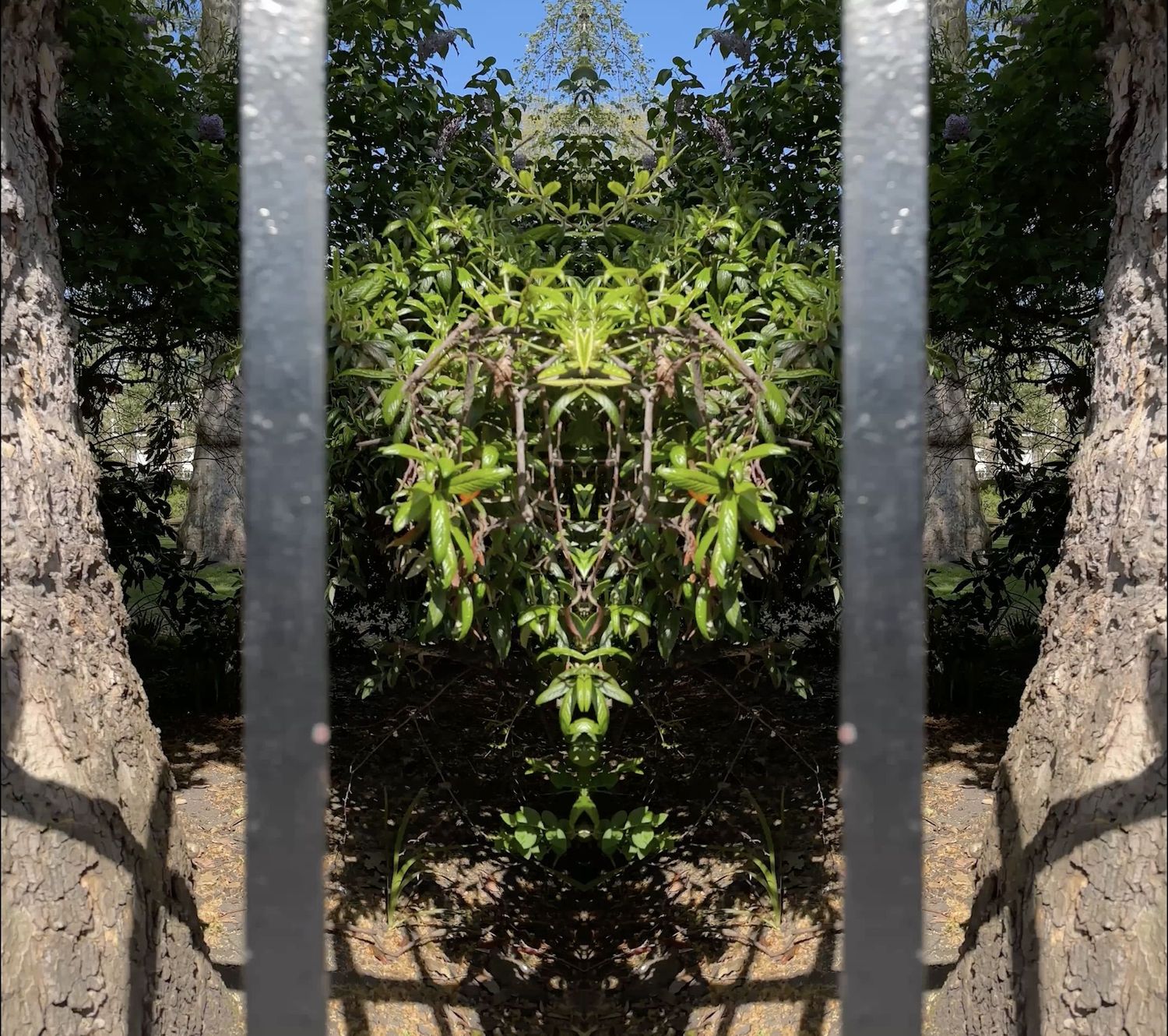
Mark Wallinger: Field at Arts Collective, Northampton. The Turner Prize-winner explores human perception and mathematics through sculpture, film, moiré paintings, and thousands of building bricks numbered in chalk. Free entry. 8 Oct–23 Jan. About Arts Collective presents Field, an exhibition by Mark Wallinger that pushes the boundaries of what can be achieved with readily available, everyday materials. Invoking the mathematical sublime, Wallinger ‘makes art work’ to investigate human perception and how we make sense of the world around us. Bringing together new and recent works across sculpture, painting and film, Field explores questions of scale, number and phenomenological experience, moving between the physical world and the systems humans construct to comprehend it. The exhibition creates a point of awe at which what can be sensed encounters what can only be imagined. Wallinger’s new film, 'The force that through the green fuse drives the flower,' takes Bedford Square in Bloomsbury, London, and its distinctive elliptical garden as the site of an interplay between perception and mathematical order. The philosopher Bertrand Russell was the grandson of the Duke of Bedford, whose family owned the estate. Its starting point includes Russell's writing on the scientist Johannes Kepler's discovery that planetary orbits are elliptical rather than circular: a moment in which observation displaced an idealised conception of how nature ought to behave. Wallinger films a continuous orbit around the garden through its perimeter railings. Their vertical bars repeatedly interrupt the image, making the mechanics of movement visible and recalling the zoetrope - the nineteenth-century "wheel of life" that preceded cinema. The footage is conjoined with its mirror image, transforming the physical garden into an unfolding pattern of symmetry and repetition. The square becomes landscape, image and perceptual apparatus simultaneously. The physical garden transforms, springing forth with endless mathematical perfection, symmetrical parity, pattern and order, and making manifest the experience of both creativity and perception. The film takes its title from Dylan Thomas’s poem 'The force that through the green fuse drives the flower', in which the energy of creation is inseparable from decay and renewal. Here, the organic world of the garden encounters the geometry imposed upon it. The work asks what happens when nature, encountered through human experience, appears to resolve itself into pattern. Further bridging art and science, the exhibition’s 'Field Paintings 'similarly render invisible phenomena material. Their title moves between the history of Colour Field painting and the scientific concept of a field: something distributed continuously across space. Wallinger stretches layers of finely gridded mesh voile across supports. Tensions and misalignments between the layers generate complex, shifting moiré effects that echo principles of interference found in sound, optics and quantum physics, most famously demonstrated by the double-slit experiment, in which particles passing through two openings produce an interference pattern associated with the creation of waves. Through this elegant economy of means, Wallinger reveals the hidden mathematical frameworks that underpin both the natural world and human sight. The word ‘field’ also retains its most ordinary meaning: cultivated land, bounded and worked. In rural Northamptonshire, that association acquires particular resonance, evoking a concern with the facts of physical existence and the materiality of the surface. 'The Lark Ascending' (2004) extends this enquiry into sound, duration and psychedelic transcendence. Over 33 minutes, the work begins in darkness and barely audible low-frequency sound before ascending almost imperceptibly through pitch and light. The screen moves gradually towards white as the soundtrack passes through different registers before resolving in the recognisable song of a skylark. Its title invokes Ralph Vaughan Williams’s 'The Lark Ascending', conceived immediately before the First World War and first performed in its orchestral form in 1921. For Wallinger, however, the skylark also carries a more local association, through the writing of Northamptonshire poet John Clare. In a new realisation of 'The Other Wall', originally developed for Wallinger's 2012 exhibition SITE at BALTIC Centre for Contemporary Art, the installation moves beyond the gallery to occupy the architecture itself. The brickwork extending throughout the building and into its historic courtyard is enumerated in chalk, with each brick on the walled facades inscribed by hand with a sequential number. The simple act of counting destabilises the apparent solidity of the wall. What is ordinarily perceived as a single thing becomes thousands of individual elements, while their physical arrangement remains contingent: one configuration among an almost unimaginable number of possibilities. The work turns architecture into both material and subject, confronting the relationship between an abstract numerical system and the physical world it attempts to describe. The commission has particular resonance at Guildhall Road; the new gallery sits between a former prison and the former council administration offices, in Wallinger's words, "all places where numbers matter." The extensive brickwork running between the galleries and courtyard allows 'The Other Wall' to move between interior and exterior, embedding itself within the fabric of the institution. Taken together, the works in Field move repeatedly between what is immediately apprehended and what exceeds apprehension. A wall becomes 9,780 individuated bricks. Layers of inexpensive mesh generate apparently immaterial movement. A garden becomes an optical mechanism. A gradual shift in frequency culminates in the song of a skylark. Here, John Clare offers a particularly resonant figure for the exhibition. In his 1835 poem 'The Skylark', the bird “winnows the air,” rising until it is almost lost from sight, yet remains a creature of the field, returning to a vulnerable nest on the ground. Wallinger is drawn to Clare precisely because his skylark is not simply a ready-made metaphor for transcendence: it has, as he puts it, “work to do, and mouths to feed.” Across Field, the apparently immaterial or infinite is similarly encountered through the material world rather than beyond it. These works feel particularly timely, not because they are about technology or science, but because they return to a much older problem: how humans devise systems to comprehend realities larger, more complex and more elusive than themselves. At a moment increasingly mediated by computational systems and artificial intelligence, Field asserts art as a space where those systems can be encountered through perception, tested, unsettled, and remade. Something cosmic moves between the material and the seemingly transcendent: an energetic force reaching toward comprehension while carrying within it the possibility of its own dissolution. Wallinger’s practice is characterised by expansive questions that emerge through the practical business of making art and an insistence on what happens at the moment we encounter it. As Wallinger puts it: “Making art work is my prime concern. Something happens at the point of apprehension: what you see, what you feel, before anecdote, theory, allegiance, or wishful thinking.” Field continues Arts Collective’s artist-led approach to its new building, in which commissions are integrated into the architecture rather than simply displayed within it. The exhibition coincides with a related presentation at Paul Stolper Gallery in London running from 17th Sept - 24th Oct, establishing a dialogue between Wallinger’s works across Northampton and London. The exhibition Field is proudly supported by the Henry Moore Foundation, Arts Council England and West Northamptonshire Council. A preview evening takes place on 7 October between 6pm and 8pm. Please check back for Christmas/New Year closures. Read more Toggle Installation Sculpture Architecture Multi-disciplinary Painting Audio / Sound Mixed media
Schedule
Starts
-
Wed, Oct 7, 2026 at 12:00 AM
Ends
-
Sat, Jan 23, 2027 at 11:59 PM
Location
24 Guildhall Road, Block D, Northampton, England, NN1 1DF, United Kingdom