Exhibition
Ángeles Agrela – Camino y Paz
Saturday, September 19
12:00 AM - Nov 7, 11:59 PM
Nicodim Gallery LA
Los Angeles, United States
Checking payment status…
Registration
Registration for this event is managed on an external website.
RSVPAbout event
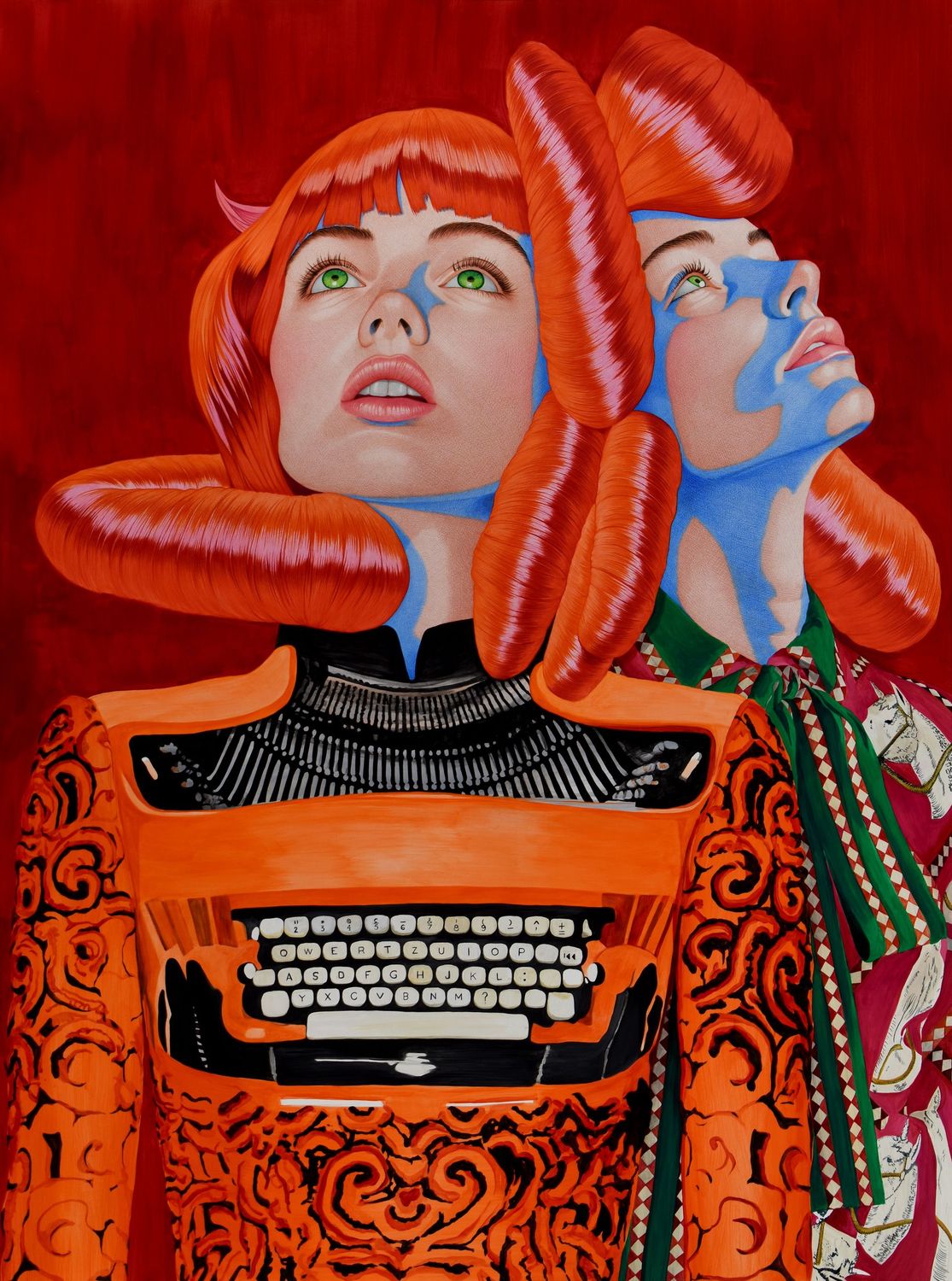
An exhibition of paintings and drawings by Ángeles Agrela exploring how women are represented through partial concealment, hair symbolism, and Marian-derived names. About In Hispanic cultures, devotion to the Virgin Mary has left a distinctive mark on women's names. Many names—Pilar, Camino, Socorro, Amparo, Consuelo, Angustias, Dolores, or Remedios (Pillar, Path, Help, Protection, Comfort, Sorrows or Remedies)—come from Marian titles and invocations that gradually moved from churches and religious imagery into everyday life. To someone outside the Hispanic world, these names can sound unusual, even mysterious, because they began as ordinary words rather than personal names. Their story also reflects the layered history of Hispanic cultures, where Catholic traditions took root through colonization and, over time, intertwined with Indigenous and local traditions. A place, a devotion, or a particular aspect of the Virgin could thus become the name of a daughter—carrying a piece of religious and cultural memory from one generation to the next. And here in Los Angeles, a city whose original name invoked Our Lady of the Angels, it is perhaps a fitting coincidence that the artist herself bears one of these names: María de los Ángeles. Names also appear in Ángeles Agrela's paintings, where they occupy an ambiguous space between identity and description. Camino, Paz, Luz, Amaia, Idoia, Arantza, Esther, Melisa: they are names, but they are also words, carrying meanings that remain present beneath their use as proper names. In this sense, they resemble Marian invocations, in which a quality, a place, an idea, or a form of protection could become the name of a woman. The women in Agrela's paintings are similarly caught between the particular and the archetypal. They appear as individuals, carefully distinguished by clothing, hairstyle, expression, and pose, yet their faces are often partially concealed by the extravagant masses of hair that surround them. The most immediate sign of identity—the face—becomes elusive. What we are given instead are fragments, attributes, gestures, and surfaces from which to construct an idea of the person depicted. This tension between recognition and concealment has been present throughout Agrela's engagement with the history of art. Her work looks back at the ways women have been pictured, classified, idealized, adorned, and transformed into images, and brings those conventions into the present. Rather than abandoning that history, she inhabits it, exaggerates it, and rearranges its elements. The result is not a rejection of representation, but a questioning of what representation asks us to see—and, increasingly, of what we assume a relationship between two women should look like. In Camino y Paz, this question is carried not only by the figures themselves but also by their names. Like the women they designate, the names hover between something concrete and something symbolic. They identify, but they also suggest. They tell us that these are particular women, while at the same time allowing the words themselves to open onto other associations: a path, a state of peace, a light, a memory, a quality. Placed together, however, the names acquire another dimension. Camino y Paz is not simply one woman named Camino and another named Paz; the conjunction suggests a relation between them—a movement from one to the other, perhaps, or the possibility that one might contain or even produce the other. The portrait begins with two individuals and becomes a space in which their identities are negotiated. Perhaps this is where the religious history evoked by the name María de los Ángeles returns, transformed. The sacred image once offered a model through which a woman could be recognized: the Virgin, the saint, the mother, the martyr. Agrela takes up a visual culture shaped by those images, but the women who emerge from it no longer need to embody a single virtue or tell a single story. They can be beautiful, strange, self-conscious, theatrical, hidden, or impossible to read. And they can exist beside another woman in ways that are equally difficult to define: as companions, doubles, rivals, ancestors, descendants, mirrors, or extensions of one another. What remains is not simply the image of a woman looking back at us, partly revealed and partly withheld, but the charged space between two women. Their proximity can suggest intimacy or conflict, dependence or equality, origin or repetition. Perhaps this is what these paintings ultimately ask us to reconsider—not simply how women have been represented, but how quickly we assume that looking is the same thing as knowing, or that being close to someone means knowing where one person ends and another begins. Read more Toggle Drawing Painting
Schedule
Starts
-
Sat, Sep 19, 2026 at 12:00 AM
Ends
-
Sat, Nov 7, 2026 at 11:59 PM
Location
1700 S. Santa Fe Ave #160, Los Angeles, California, 90021, United States