Exhibition
Womens Drawings, Feminist Works on Paper
Friday, October 2
12:00 AM - Nov 30, 11:59 PM
Duane Thomas Gallery
New York, United States
Checking payment status…
Registration
Registration for this event is managed on an external website.
RSVPAbout event
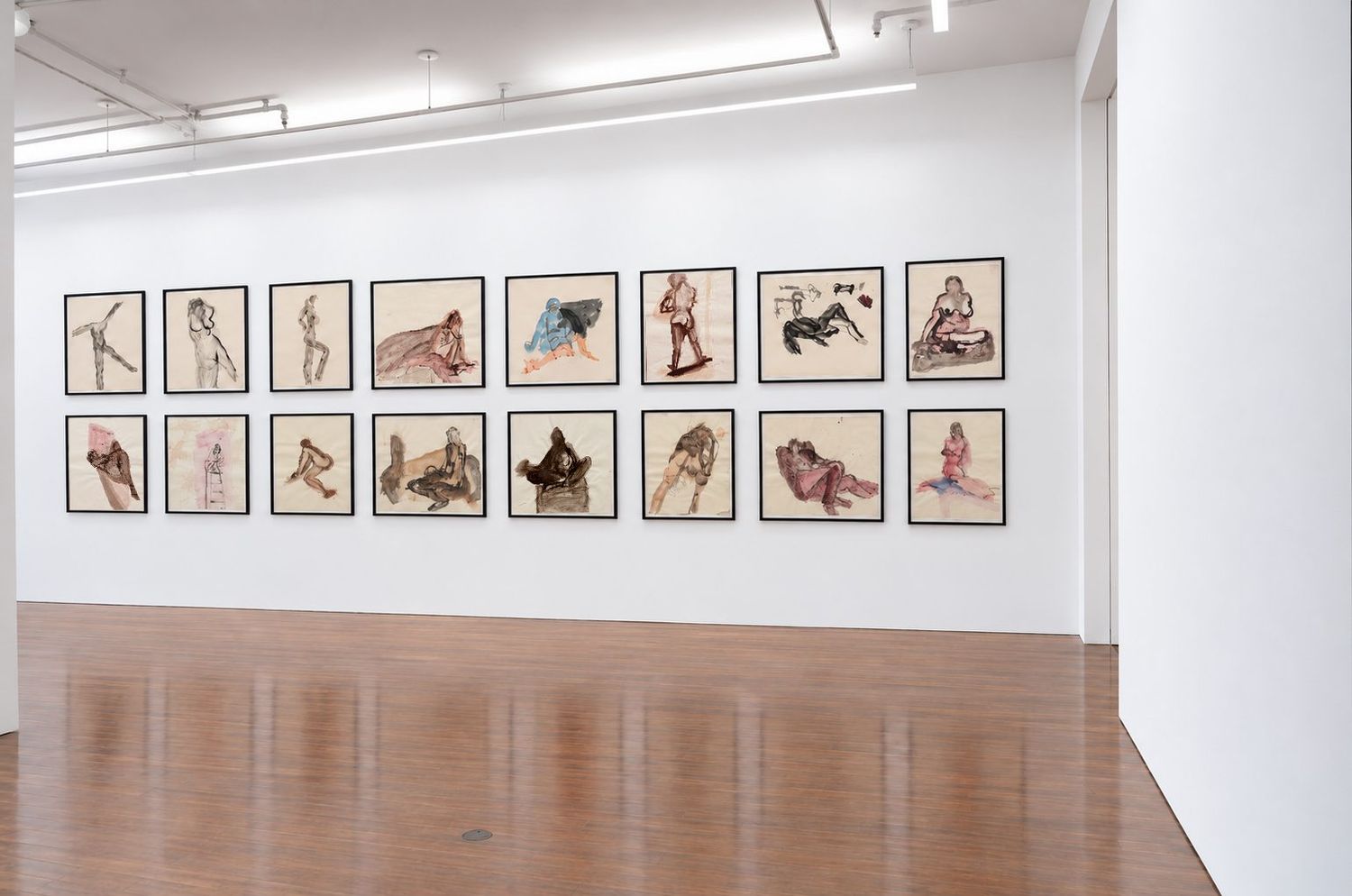
An examination of paper as a medium for women artists working during the emergence of feminist art in the 1960s and 1970s, tracing the persistence of these concerns into the present. About Women's Drawings, Feminist Works on Paper examines the importance of paper as a medium for women artists working during the emergence of feminist art in the 1960s and 1970s, while tracing the persistence of these concerns into the present. Rather than treating drawing as secondary to painting, sculpture, or performance, the exhibition considers the sheet of paper as an intimate and adaptable site of artistic inquiry—one capable of holding the personal, the political, the domestic, the experimental, and the documentary. The exhibition brings together artists whose approaches to paper range from the direct observation of the body to journals and notebooks, pattern, domestic materials, historical research, and the recording of women's lives. This history is closely connected to the pioneering work of critic and curator Lucy R. Lippard, whose 1971 exhibition Twenty Six Contemporary Women Artists at the Aldrich Museum of Contemporary Art brought together a generation of women artists working across a remarkably diverse range of practices. Among them were Cynthia Carlson, Shirley Pettibone, and Barbara Zucker all represented here. It is within this expanded field that the exhibition turns specifically to paper. A substantial group of drawings by Eunice Golden, made between 1963 and 1970, offers an intimate entry into the artist's early investigation of the body, sexuality, and representation. Working on paper allowed Golden to approach these subjects with immediacy and freedom, and her drawings reveal a sustained engagement with the figure at a moment when women artists were increasingly questioning who had the authority to represent the body. Presented together, the drawings are not studies for another medium but a substantial body of work in their own right, demonstrating the capacity of drawing to become a direct and personal means of confronting sexuality and the female experience. Cynthia Carlson's drawings similarly make the materiality of paper central to the work. Safety pins and other metal sewing pins are attached directly to the sheets, puncturing and organizing the surface. Materials associated with sewing and domestic labor are transformed into elements of drawing, collapsing the distinction between traditionally feminine craft and contemporary art. Carlson's notebooks extend this practice into a more intimate form of recording and research. They are presented alongside the journals of Shirley Pettibone, whose drawings and notebooks from the mid-1960s demonstrate how writing and image can coexist within the same artistic space. In both artists' work, the notebook becomes a place for thinking through drawing—a form that can remain provisional, accumulative, private, and unfinished. Joyce Kozloff's Tepotzlan (1973) introduces another important dimension. Characteristic of Kozloff's engagement with pattern and decoration, the work reflects the expanded interest of the 1970s in ornament, repetition, craft, and decorative structures. Pattern offered artists a means of questioning the hierarchies that had historically separated the supposedly serious from the supposedly decorative, and fine art from forms of production traditionally associated with women. Barbara Zucker's works concerning wet nursing extend the role of paper into historical and social research. The exhibition includes an installation of works made during the 1990s, resulting from Zucker's sustained investigation of wet nursing and its histories. Here drawing becomes a form of inquiry: paper serves as a place where historical information, bodily experience, research, and memory can accumulate. The work brings into view a largely overlooked history of women's labor and the ways in which women's bodies have been understood, used, and regulated. The exhibition's concerns extend into the twenty-first century with Mimi Smith's Timelines series (2007). Comprising two drawings of onesies—one associated with a baby and the other with a young girl—the works approach women's lives with the humor and detached curiosity of an archaeologist reconstructing a civilization from its surviving objects. Smith's deceptively simple garments become markers within a chronology: the objects of childhood are placed within a larger trajectory of female life, suggesting the successive stages through which the female body and its reproductive possibilities are culturally understood. With wit and economy, the works invite us to consider the breadth of women's reproductive lives not as a single biological event but as a chronology extending from childhood through adulthood and beyond. Smith's Timelines also introduces a different conception of drawing into the exhibition. The garment is not represented for its own sake; it becomes evidence. Like an artifact recovered from another culture, the onesie can be read as a clue to the social expectations, identities, and conditions surrounding women's lives. The humor of the work is therefore inseparable from its critical perspective. By imagining the history of women through objects and stages of dress, Smith transforms the familiar into something strange enough to be examined anew. Taken together, these works propose a history of feminist drawing that is not defined by a particular image or style. Instead, it emerges through different relationships to materials and methods: the intimacy of the sheet, the immediacy of the hand, the notebook as a place of thought, sewing materials transformed into drawing, pattern reclaimed from the category of decoration, historical research carried through repeated acts of looking and recording, and the reconstruction of women's lives through the objects that surround them. Paper, in this context, is more than a support. It becomes a place where women's experiences can be observed, documented, questioned, remembered, and reimagined. From Golden's bodies of the 1960s to Smith's archaeological humor of 2007, these artists demonstrate how drawing can make visible forms of experience that have often existed at the margins of art history. More than fifty years after Lippard's Twenty Six Contemporary Women Artists, the exhibition continues that expanded understanding of what women's art can be: not a singular style, but a multiplicity of ways of looking at women's bodies, histories, labor, sexuality, domestic lives, and reproductive experience. Read more Toggle Installation Drawing Mixed media
Schedule
Starts
-
Fri, Oct 2, 2026 at 12:00 AM
Ends
-
Mon, Nov 30, 2026 at 11:59 PM
Location
3rd floor, 137 West Broadway, New York, New York, NY 10013, United States